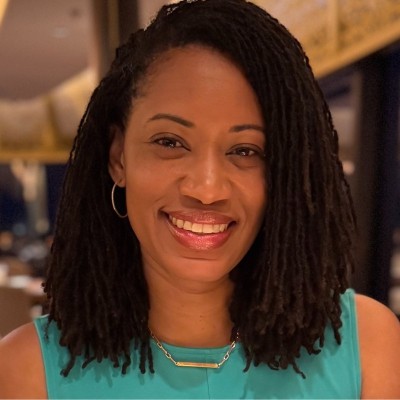
October 27, 2025: AfroTech
The idea for KinTrades had been with me for most of 2025. I'd seen the problem from inside my own family and inside my own rental business. I had the systems-engineering training to design the solution. What I didn't have was permission — from myself, or from the people I love — to start.
I'd finished my Master's in Engineering at the University of Virginia in May 2025, after years of evening classes around work and family. When I told my family I was ready to start something new, they made one request: six months. Rest first. Stay present. Let the dust settle. I agreed.
October 27, 2025, I was at AfroTech. Rooms full of Black builders, engineers, and founders, all of us building things the world didn't necessarily build for us. By the end of the day I knew the six months were up — and I wasn't going to wait another week.
The PRD for KinTrades is dated October 28, 2025. I started it on the way home. The next 20+ days were a sprint of their own — writing requirements, scoping the MVP, and sitting down with the people the platform would actually serve. I talked with skilled trade workers, employers, business owners across our communities, justice-impacted individuals, veterans, and truck drivers. Every conversation sharpened a piece of the document. The grind cadence I describe in the technical track didn't start in December. It started the morning after AfroTech — on paper and in conversation — before a single line of code was written.
Why We Started
The AfroTech moment is when I started. The reason I started is older than that, and it isn't just mine.
My husband and co-founder Ed came to skilled trades the way most great tradespeople do: by doing the work for over a decade. He served in the U.S. Army as a construction supervisor and heavy equipment operator — the start of 13+ years of hands-on construction, engineering, and equipment work. He never liked sitting at a screen all day. What he loved was the trade itself: working with his hands, fixing the thing in front of him, finishing something he could point at. Today he teaches Career and Technical Education to high school seniors exploring pathways into the trades, and he still does the hands-on work — flooring, electrical troubleshooting, the handyman jobs that come with our rental properties every month. What he keeps telling me is that the people coming up have the skill, but the system around hiring doesn't see them clearly.
I came to the same problem from a different door. I've watched men in my own family build successful lives and careers after incarceration. I've seen what changes when an employer is willing to look past a record at the worker in front of them — and what happens when they aren't. That experience is the reason I care about hiring at all.
Ed and I also own rental properties together. We hire trades workers every month, and Ed handles much of the hands-on work himself. We have been on every side of this transaction: we are the worker (Ed), the employer, the teacher, and the family member of someone the system overlooked.
That's where KinTrades comes from. Not market research. Not a thesis. A shared problem, lived from four angles — and a conference room in late October that told me it was time to act on it.
Before the Code, Before the LLC
The order things actually happened: a written product idea, then the company, then the code.
I started a PRD on October 28. The first version had competitive analysis, a business model, a draft MVP scope, pilot targets, and a research plan — but "PRD" understates how much that document moved. It got rewritten, sometimes substantially, every time we learned something from validation conversations, from building, from testing what worked. It wasn't a fixed artifact. It was a working hypothesis we updated whenever reality contradicted it. (The product track has more on that iteration loop.)
November was for getting the first version of that document defensible enough to act on, having the validation conversations described in the product track, and standing up the company: forming KinTech LLC, opening business banking, securing the domain, and provisioning the cloud accounts that December's coding would need. December was when the first lines of code began.
I mention this because the temptation when reading a founder series is to assume the company came first and the idea got worked out later. The reverse was true here. KinTech LLC was formed in November to operate a platform whose direction was clear enough to start building — even if every part of that direction would get sharpened in the months to come.
What the LLC Made Possible
KinTech LLC had to exist before a single feature could be built — not because the code required it, but because everything around the code did: cloud accounts, domain registration, identity verification, banking, and eventually contracts with partners.
This is the part founders talk about least because it's not exciting. But it determines whether you can actually operate.
Choosing an LLC
We formed KinTech LLC as the operating entity behind KinTrades. The LLC structure gave us liability protection, pass-through taxation, and the flexibility to bring on partners or investors later without restructuring.
For a bootstrapped startup, an LLC is the cheapest meaningful liability protection you can buy. A sole proprietorship exposes your personal assets. A corporation adds overhead that doesn't make sense until you're raising institutional capital. The LLC fits the middle — and the middle is where most bootstrapped technology companies live.
Business Banking and Financial Separation
A dedicated business bank account wasn't optional — it was the first operational requirement. Every cloud service, API subscription, and domain registration had to be a business expense, not a personal charge. Co-mingling funds is one of the fastest ways to lose your LLC's liability protection.
We set up business banking, a dedicated business card for recurring cloud charges, and basic bookkeeping from day one. When grant applications ask for financial records, you need them to exist and be clean.
Domain, Identity, and the Long Setup Tail
Securing the domain, setting up DNS, and configuring email for the business domain were early priorities. The domain is your identity — for users, for partners, and for the identity provider that authenticates your users. We needed a verified business domain before configuring authentication, sending transactional emails, or signing up for communication APIs.
None of this work shows up in a demo. All of it is required before you can demo anything.
Cloud Account Structure
Cloud infrastructure is the largest ongoing cost for a SaaS startup, and the easiest one to mismanage. We set up the cloud account with separate resource groups for each environment, spending alerts at multiple thresholds, and tagging for cost attribution. Knowing which service is costing what — and getting alerted before a bill surprises you — is survival-critical when you're bootstrapped.
Early Legal Considerations
Even before launch, legal requirements shaped product decisions:
- Terms of Service and Privacy Policy — required before any user could create an account
- Data handling obligations — understanding what data you'll collect and what laws apply before building the forms that collect it
- Trademark awareness — making sure the brand name doesn't conflict with existing marks in the hiring and workforce space
- Contractor vs. employee classification — KinTrades connects workers with employers, so the platform had to be clearly positioned as a hiring tool, not a staffing agency
Who We Serve
We started with a clear commitment to justice-impacted workers. That commitment came from lived experience — I've seen what changes when an employer looks past a record at the worker in front of them.
As we built and talked with workforce partners, we kept seeing the same pattern in other populations: veterans transitioning out of the military, students entering the trades for the first time, parents returning to work, workers coming off public assistance. Different doorways, same threshold problem — capable people locked out of opportunity because the filter at the front door was tuned for the wrong signal.
That convergence didn't dilute our focus. It sharpened it. KinTrades serves workers who have been systematically filtered out, and the employers willing to filter for capability instead of pedigree. Justice-impacted workers remain central to that mission. Veterans, students, and other underserved populations confirm the pattern is real and the solution applies broadly.
Grant Readiness
As a bootstrapped company, grant funding is part of the growth strategy. Grant applications — whether from workforce boards, state economic development agencies, or federal programs — require specific documentation: articles of organization, EIN, business bank statements, financial projections, and proof of operations.
Having these in order from the start means you can respond to grant opportunities within their deadlines instead of scrambling. The best grant is the one you're already prepared to apply for.
What I'd Do Differently
I'd open the business bank account the same week I filed the articles of organization, not three weeks later. Every day between "you're an LLC" and "you can spend like one" is a day you're paying for cloud services on a personal card and creating cleanup work for yourself.
The Takeaway
Starting a company is a distinct activity from building a product. The LLC, the bank account, the domain, the legal framework — these aren't distractions from the "real work." They're the foundation that makes the real work possible and legally defensible. Get them right early, and they become invisible infrastructure. Get them wrong or skip them, and they become blockers at the worst possible time.
What I came back to over and over in those first weeks: systems create equity. Fix the system, change the outcomes. The legal entity was the first system we had to fix so the rest of the work could happen.